A comprehensive analysis of the Preah Vihear dispute between Thailand and Cambodia, tracing its history from colonial-era maps through the 1962 and 2013 ICJ rulings to the 2008–2013 clashes and the deadly 2025 escalation. The article examines nationalist narratives, humanitarian impacts, and diplomatic efforts (ASEAN, UNESCO, UN) and proposes solutions for sustainable peace.
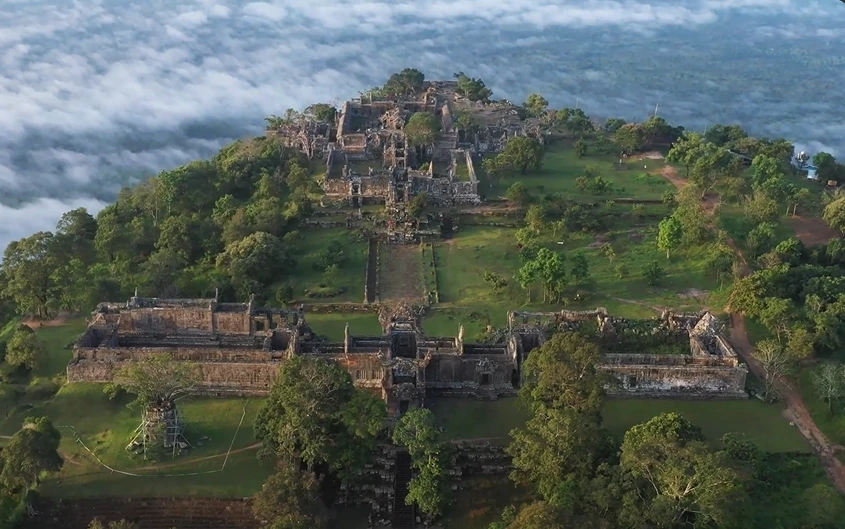
The Prasat Preah Vihear temple sits atop the Dangrek Mountains overlooking Cambodia and Thailand. Built in the 11th–12th centuries during the Khmer Empire’s golden age, it was long part of the Hindu-Buddhist heritage of the Khmer civilization. Over the centuries, the region shifted hands: a weakened Khmer kingdom ceded territory to Siam (Thailand) in 1794, while Cambodia later became a French protectorate (1863). The modern border was first defined by Franco-Siamese treaties in the early 1900s. A 1904 treaty fixed the frontier along the watershed of the Dangrek range, which, if taken at face value, would have placed most of Preah Vihear on Thai soil. In 1907 French surveyors drew a detailed map that deviated from that watershed line and showed the temple on the Cambodian side. Siam protested but never produced an alternate survey, so the map was quietly used thereafter.
After World War II and Cambodian independence, control of the temple remained contested. Thai forces occupied the site in 1954, but Cambodia filed a case at the International Court of Justice (ICJ) in 1959 to “regain what it regarded as part of its cultural heritage”. In 1962 the ICJ ruled unanimously that “the Temple of Preah Vihear is situated in territory under the sovereignty of Cambodia,” basing much of the decision on the colonial-era map. The Court noted that Thailand had acquiesced to the French-drawn boundary for nearly half a century, despite Thailand’s protests that the survey was not properly validated. The resulting 9–3 judgment awarded the temple complex to Cambodia. Thailand reacted angrily, withdrawing its troops, but quietly (and grudgingly) accepted the verdict. Cambodia’s leader Prince Sihanouk then held a ceremonial transfer of the site in 1963, inviting Thais to visit without visas and even allowing some relics to remain in Thailand despite the ICJ order to return them.
Border Treaties and Maps (1904–1940s)
- 1863–1868: King Norodom of Cambodia came under French protection (1863). In 1868 Siam formally renounced suzerainty over Cambodia in exchange for territory in the west and north, including the Dangrek area. Thus, Preah Vihear lay near Siam’s de facto frontier.
- 1904 Franco-Siamese Treaty: Article 1 agreed that “the frontier […] in the region of the Dângkrêk [Dangrek] range would follow the natural watershed line”. In practice, this should have put Preah Vihear on Thailand’s side of the line, but the treaty left precise demarcation to a mixed commission.
- 1907 Survey and Map: French engineers drew a topographical map for the commission. It ignored the watershed and placed all of Preah Vihear inside Cambodia. Siam’s commissioners did not formally approve it, but also did not reject it outright. After France’s Indo-Chinese Union collapsed post-WWII, Thailand briefly seized the temple again during the Franco-Thai War of 1941, only to return it after the war when France reestablished control.
Thus by the mid-20th century the border around Preah Vihear was a patchwork of historical claims and colonial-era documents. The French-Thai map (and underlying treaties) would later become central evidence in legal arguments. Thailand insisted after 1962 that only the temple itself had been decided, while Cambodia argued the map (and all adjacent promontory land) belonged to it.
1962 ICJ Decision and Reactions
In 1962 the ICJ delivered its judgment in the Temple of Preah Vihear case (Cambodia v. Thailand). As the Court explained, it was not deciding “the inheritance rights” of either country to the Khmer Empire, but rather which colonial-era border was legally in force. The Court concluded “the Temple of Preah Vihear is situated in territory under the sovereignty of Cambodia,” citing the 1907 map. It noted Thailand had treated the Franco-Siamese map as binding for decades and had never formally rejected it, so that map – rather than the watershed – governed. The decision (by 9 votes to 3) gave Cambodia full sovereignty over the temple complex.
Thailand’s reaction was immediate and fiery. Officials claimed the survey was invalid, but ultimately Thailand quietly withdrew its remaining troops as ordered. The Court “said almost nothing about the sensitive issues of cultural ownership,” hoping to avoid inflaming passions. Thailand’s government responded “with diplomatic sound and fury” but in practice acquiesced. (Prince Sihanouk of Cambodia even held a “peace ceremony” at the temple in 1963, emphasizing shared Buddhism and granting Thai visitors special access.) Officially Thailand accepted the ruling, but many Thai nationalists chafed at “losing” Preah Vihear.
Renewed Clashes (2008–2013)
The dispute lay largely dormant for decades, but domestic politics and heritage issues reignited tensions in 2008. In July 2008 Cambodia successfully nominated Preah Vihear as a UNESCO World Heritage Site. This triggered a nationalist firestorm in Thailand. Opposition leader Sondhi Limthongkul and the “Yellow Shirt” movement accused the government of “forfeiting Thai dignity” and even high treason. Thai Prime Minister Samak Sundaravej had supported the listing (even signing a joint communique), but under pressure he rescinded that support. The temple issue became a rallying cry for rival Thai factions: every Thai leader felt compelled to “dredge up the history of Preah Vihear” to burnish nationalist credentials. Simultaneously, Cambodian leaders embraced the UNESCO move as a victory, bolstering national pride.
Protests and counter-protests erupted on both sides of the border. In mid-July 2008, Thailand deployed troops to the contested area around the temple to “reclaim” territory. Cambodia, in turn, increased its forces. By late July, roughly 1,200 troops on each side of the temple were encamped in heavily disputed zones. Minor gunfire exchanges and mutual accusations followed through 2008 and 2009. Notable flashpoints included a patrol clash in October 2008 and artillery duels in 2011. The nearby Temple of Ta Moan Thom (also claimed by both) was the scene of a dispute in early 2025, but similar Ta Moan clashes had occurred before.
Violence flared most severely in early 2011. A Thai nationalist group’s members briefly entered Preah Vihear and were detained by Cambodia; Thailand protested angrily. Between February and April 2011, a series of firefights killed at least 26 people (on both sides) and forced tens of thousands of villagers to flee. The border area around the temple – long mined during the civil wars – was the site of repeated small battles. In June 2011 the UN Security Council even took the unusual step of referring the case to ASEAN for mediation. Indonesia (as ASEAN chair) sent foreign ministers and observers; a provisional demilitarized zone (DMZ) was agreed by the ICJ in July 2011 to try to prevent further clashes. However, implementation faltered: Thailand later backed out of allowing ASEAN observers (claiming it infringed sovereignty).
Amid these crises, Cambodia once again turned to the ICJ. In April 2011 it requested an interpretation of the 1962 judgment, asking whether that verdict required Thailand to withdraw from the entire promontory around Preah Vihear. In November 2013 the Court handed down its clarification. By unanimous decision, the ICJ held that “Cambodia has sovereignty over the whole territory of the promontory of Preah Vihear,” as defined by the 1907 map, but left the fate of a nearby hill (Phnom Trap) to further bilateral negotiation. In effect, the Court extended its 1962 judgment to all land immediately adjacent to the temple. Thailand was ordered to remove any troops from the contested area.
Thailand’s government again reacted coolly. Thai officials emphasized that only the temple itself had been settled by the earlier judgment, and it refused to accept any new ICJ resolution. Defense chief General Prayut Chan-o-cha warned Thailand “would not necessarily abide by the ICJ ruling.” As a Thai analyst noted, each side had domestic political reasons to interpret the legal outcome in its favor – Cambodian leaders as national vindication, Thai leaders as resisting foreign dictates. In practice, both states largely kept a fragile peace from 2013 until 2025, even as the border remained thick with troops on unofficial ceasefire.
2025 Escalation: War in the Borderlands
In mid-2025 the simmering dispute exploded again. On February 13 and 17, a series of provocations at the Prasat Ta Moan Thom temple (in the western portion of the same Dangrek ridge) escalated tensions. Minor clashes in late May left one Cambodian soldier dead, and both sides accused the other of laying fresh landmines along border patrol routes. By July the situation was boiling: on July 23 Thailand recalled its ambassador to Phnom Penh after two Thai soldiers lost limbs to landmines. The next day, July 24, heavy fighting began.
Fierce artillery, rocket barrages, and even airstrikes soon swept the border. The July 24–26 battles saw the heaviest combat in over a decade. According to the latest tallies, at least 32 people have been killed, including 19 in Thailand (13 of them civilians) and 13 in Cambodia (5 soldiers and 8 civilians). Hundreds have been wounded. On the Thai side, airpower was used for the first time in this dispute: F-16 jets bombed suspected targets in Cambodia. Cambodia has no jets, but it launched BM-21 rocket barrages and used artillery and anti-tank missiles. Each side accuses the other of starting the assault: Cambodia’s defense ministry charged that Thailand launched a “deliberate, unprovoked, and unlawful military attack” on July 24, while Thailand’s foreign ministry released statements blaming Cambodian shelling and demanding an immediate end to Cambodian hostilities.
The human toll has been devastating. More than 130,000 Thais have been uprooted from villages in border provinces – seeking refuge in some 300 temporary shelters. Cambodian authorities report over 23,000 Khmer civilians evacuated from Preah Vihear province. Elderly villagers and children huddle in school halls and temples, fleeing the concussion of shellfire. A Thai woman from Sisaket province told Reuters: “We got so scared with the sound of the artillery. We lost contact with my husband. We have nothing now but our lives.” Elsewhere a grandmother wept, “We heard very loud explosions … We were so scared,” as she gathered with other evacuees.
Even the ancient temples themselves have not been spared. Both sides reported damage to heritage sites. On the Cambodian side the Preah Vihear sanctuary was struck multiple times by Thai heavy guns and bombs. Cambodia’s Preah Vihear Authority released photos showing shattered sandstone lintels and scorched gopuras (entrances) – lamenting that Thailand, as a signatory of the 1954 and 1972 UNESCO conventions, “has not fulfilled its obligation under international laws to protect this World Heritage”. (Thailand denies targeting the temple, calling the claims “distortions.”) Across the border, Thai soldiers say Cambodian rockets struck a busy fuel station in Sisaket province, killing six civilians and wounding ten. Dozens of homes, farms and businesses on both sides have been destroyed or abandoned in the crossfire. One Thai evacuation center painted a grim picture: “So many people are in trouble because of this war … we are very sad that we have to live like this.”
Nationalism and Narrative
Preah Vihear has long been a lightning rod for nationalist sentiment. For Cambodia, it is a potent symbol of the Khmer Empire’s legacy. Indeed, Cambodian arguments emphasize that the temple was built at the zenith of Angkorian civilization, inseparable from the great heritage of Angkor Wat. Textbooks and media in Cambodia often portray Preah Vihear as an undisputed Khmer treasure, sovereign since antiquity. In Thailand, by contrast, nationalist narratives have long treated Preah Vihear as a “lost” part of Siam’s historical domain. Many Thais were taught that the temple was once under Thai control, and that colonial interference fraudulently deprived Thailand of it. Complaints over the temple resonate with Thai fears of foreign encroachment.
Political leaders have repeatedly stoked these feelings. In 2008 the Thai “Yellow Shirt” movement – nationalist, royalist protesters – used the Preah Vihear issue to attack Prime Minister Samak’s government, accusing it of “treason” for conceding even minor Thai claims. Graffiti and demonstrations demanded that Thailand “take back” Preah Vihear. Conversely, Cambodian Prime Minister Hun Sen (and in 2025 his successor Hun Manet) have rallied support by casting Thailand as the aggressor denying Cambodia its rightful heritage. A Cambodian official notes that many Cambodians harbor resentment “at what they perceive as a Thai sense of superiority”. For example, a 2003 incident – in which a Thai celebrity was falsely quoted as claiming “Angkor Wat belongs to Thailand” – sparked violent riots in Phnom Penh and became a touchstone of anti-Thai nationalism.
Media coverage in both countries amplifies nationalistic language. Thai outlets often headline the dispute as Thai sovereignty being violated, while Cambodian media lament “Thai aggression” against a Khmer site. Each side’s textbooks and school curricula tend to reinforce these views: Thai students learn that Preah Vihear fell within the ancient Ayutthaya/Siamese kingdom, whereas Cambodian students learn it is a pinnacle of Khmer heritage. These parallel historical narratives leave little room for nuance. As one analyst observed, “for both Thailand and Cambodia, the question of the land surrounding Preah Vihear represents critical issues of sovereignty and national pride.” The temple itself thus transcends history; it has become a symbol in a long-standing battle of national identity.
Humanitarian Impact
Beyond statistics and politics lies the grim human impact. Thousands of families from ethnic Thai and Khmer villages have been displaced. In the first week of fighting, Thai authorities reported over 138,000 people evacuated from border provinces such as Surin, Sisaket and Ubon Ratchathani; Cambodian officials reported more than 23,000 displaced in Preah Vihear province. In cramped shelters, many live on rations with no livelihood. Healthcare facilities in border towns are overwhelmed treating the wounded; children are acutely frightened by nighttime shelling and unable to sleep. As a Thai shelter manager said, “So many people are in trouble because of this war … we are very sad that we have to live like this.” The trauma of constant artillery and the sight of bombed homes will burden families for years.
Civilians are not the only victims. Village temples and sacred shrines have been hit. Historical pagodas and stupas less famous than Preah Vihear have been used as cover and subsequently shelled. Mines and unexploded ordnance from the fighting pose continuing dangers to villagers returning home. The region’s forests and farmland have seen tank tracks and craters. Even beyond immediate injuries, schools have closed, crops lay untended, and the local economy has ground to a halt. In 2009–10, after earlier clashes, analysts warned that continuous militarization was already a “risk of possible further incidents”; today that risk has been realized. Heritage officials report heavy damage to parts of Preah Vihear: gopuras (ornate gateways) and staircases have shattered granite, and ancient carvings are pockmarked by shell splinters. Such destruction on a World Heritage site is a cultural tragedy; as Cambodia’s Preah Vihear Authority put it, this “aggression caused significant damage to the physical structure of the world heritage site and its surroundings.”
Diplomatic and International Responses
The renewed fighting has drawn immediate global concern. ASEAN – the regional bloc of which both countries are members – finds itself tested. Malaysia, the current ASEAN chair, promptly called for a ceasefire and offered to mediate. Malaysia’s prime minister told both leaders to stand down; Cambodia’s Hun Manet expressed support for the proposal, while Thailand’s acting premier initially agreed but then set conditions. Other powers have also weighed in: Thailand disclosed that the United States, China and Malaysia had all offered to help mediate. The UN Security Council held an emergency meeting on July 25. Cambodia’s UN envoy urged an “immediate ceasefire – unconditionally,” accusing Thailand of “unprovoked, premeditated” aggression. Thailand’s UN ambassador reciprocated, demanding that Cambodia “immediately cease all hostilities and resume dialogue”. UN Secretary-General António Guterres called for “utmost restraint,” and the US and China each urged de-escalation.
UNESCO, the guardian of heritage, has also been involved. In February 2011 the UNESCO Director-General Irina Bokova had already warned of danger to the temple: a previous outbreak had “caused several deaths and damage to the site,” and she planned to send a mission to survey its condition. In 2025, UNESCO has joined calls to protect the ancient monument; the Cambodian government has briefed UNESCO representatives in Phnom Penh about the damage. In fact, UNESCO helped establish an international committee (ICC-Preah Vihear) in 2014 to oversee conservation; Thailand is a member of this committee. Cambodia has also invoked international law: its culture ministry issued notices that Thai attacks violated the 1954 Hague Convention and the 1972 World Heritage Convention.
ASEAN’s conflict-management norms have been strained. In the 2011 crisis, ASEAN dispatched observers only to see Thailand later refuse them; this time Indonesia (ASEAN’s ASEAN chair in 2011, now retired) along with Malaysia have quietly lobbied for talks. So far neither side has allowed foreign troops into the zone. Instead, at the end of July Cambodia filed letters with the UN Security Council, officially blaming Thailand for “unprovoked and premeditated military aggression,” and asking for international intervention. Thailand has insisted on resolving the issue bilaterally and refused to accept further ICJ jurisdiction. Both governments issued carefully worded statements professing a desire for peace and respect for sovereignty, even as their armies remained mobilized on the frontier.
Humanitarian organizations have also sounded alarms. UNICEF and local aid groups have appealed for safe corridors for civilians, and the ICRC has warned of a humanitarian catastrophe if fighting continues unchecked. Even amid war, international conventions remain reference points: Cambodia’s culture minister cited Thailand’s obligations under UNESCO treaties to condemn the attacks on the temple. In sum, ASEAN, the UN and UNESCO all urge restraint, but so far no neutral force has been agreed upon by both parties.
Pathways to Peace
The Preah Vihear conflict has defied easy solutions for over a century. Yet amid the tragedy there are possible routes toward a lasting peace:
- Demilitarized Zone and Joint Monitoring: One practical step is to extend the provisional DMZ that the ICJ recommended in 2011. Both sides could agree to a temporary ceasefire line around the Preah Vihear promontory, patrolled by international observers (perhaps under an ASEAN or UN mandate). This would reduce the chances of accidental or intentional skirmishes while larger talks proceed.
- Activate the Joint Boundary Commission: In 2000 Thailand and Cambodia formed a Joint Boundary Commission to peacefully sort out all border disputes, but it has been moribund. Revitalizing this mechanism – with the aid of neutral mediators and modern mapping technology – could finally produce a mutually agreed border map. Clear demarcation (even if provisional) would remove the colonial-era ambiguity that fuels claims.
- International Adjudication of Remaining Disputes: For thorny sections of the border (especially the “Emerald Triangle” trisector with Laos), both sides could submit the claims to a third party. Cambodia has already proposed asking the ICJ or another court to adjudicate unresolved areas. Thailand has shunned this route thus far, but a new joint commission or an ASEAN tribunal might be more acceptable. The goal would be a final, legally binding line for at least the most contested zones beyond just the temple site.
- Joint Heritage Management: Because Preah Vihear is a UNESCO World Heritage Site, a collaborative approach to its care could shift focus from sovereignty to conservation. Thailand and Cambodia could form a bilateral management committee for the temple (even before border lines are settled), ensuring archaeological research, tourism and preservation proceed cooperatively. Similar arrangements (e.g. joint committees) exist elsewhere for shared sites. Such joint stewardship might build trust: guarding against looting and damage through shared responsibility underscores that the temple’s value transcends politics.
- Economic and People-to-People Initiatives: Peace must be built from the grassroots. Both governments could promote cross-border trade, local markets and cultural exchanges in quieter areas, giving communities a stake in calm. Education reform and public media could emphasize the shared history and common interests, moving away from nationalist rhetoric. Peace NGOs and community leaders on both sides could organize interfaith pilgrimages or heritage walks that cross the border (as once permitted), to humanize the “other side.” Clearing landmines together and constructing joint infrastructure (roads, medical clinics) in the borderlands would also physically and emotionally heal the wounds of conflict.
- Regional Diplomatic Engagement: ASEAN’s role need not be limited to statements. Malaysia, as chair, could convene an emergency session of ASEAN foreign ministers to negotiate a formal ceasefire agreement, backed by a UN resolution. Major powers (e.g. China, Japan, India) could offer to sponsor reconciliation summits or confidence-building programs. If both governments feel ASEAN norms have been violated, a more pragmatic ASEAN stance – balancing non-interference with conflict prevention – could be carved out.
No single measure will suffice on its own. However, a combination of legal clarity, shared management of heritage, and genuine peacebuilding efforts offers a path beyond the shootouts and duels of 2025. As human rights advocate Phil Robertson warned, “how many civilians will get killed in the indiscriminate crossfire” is now the urgent question. Breaking that cycle requires leaders who are willing to lower the flames of nationalism and address both history and humanity.
Sources: John D. Ciorciari, “Thailand and Cambodia: The Battle for Preah Vihear” (Stanford FSI); International Court of Justice, Temple of Preah Vihear Judgment (1962); Murray Hiebert & Amy Killian, CSIS – “Thailand, Cambodia Spar at UN Court…” (Apr. 2013); Irina Bokova statement, UNESCO (Feb. 2011); Al Jazeera, “What we know about clashes…” (July 24, 2025); Reuters (Bangkok) “Thailand and Cambodia exchange heavy artillery…” (July 25, 2025); Reuters, “Why are Thailand and Cambodia fighting…” (June 6, 2025); Cambodianess, “Preah Vihear Authority Denounces Thai Attacks…” (July 26, 2025); The Guardian, “Cambodia calls for ‘immediate ceasefire’…” (July 26, 2025). (Additional information from ICRC legal case study and news reports as cited.)
Follow ASClinic for more updates!